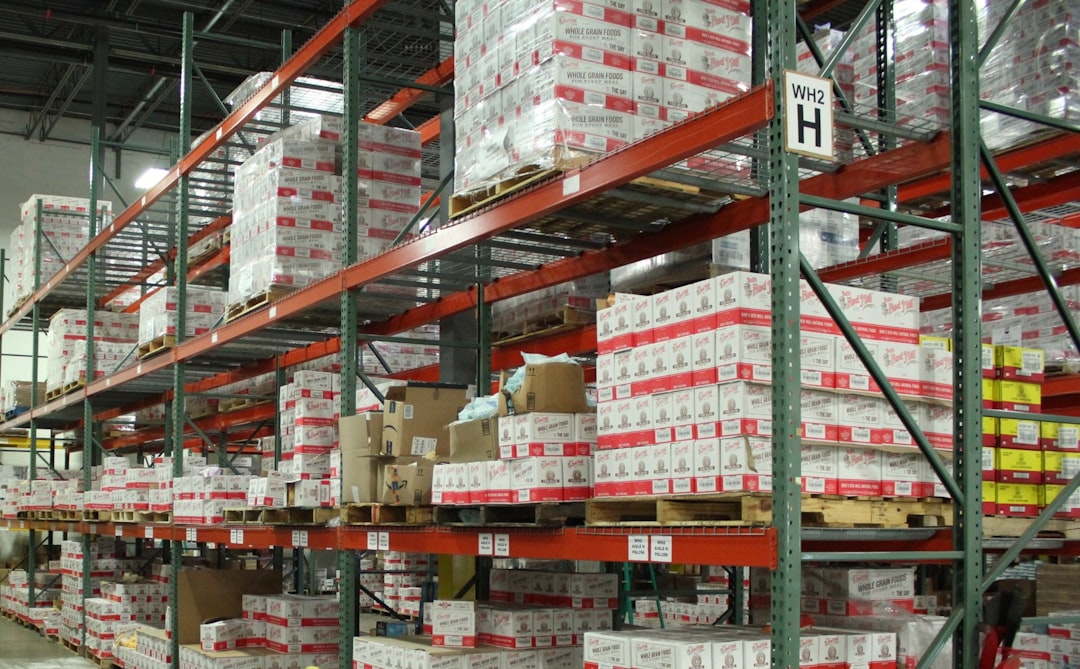
Introduction: The Dawn of a New Era in Inventory & Logistics with AI
The modern business landscape is perpetually challenged by unpredictable market fluctuations, increasing supply chain complexities, and diversifying consumer demands. Within this environment, inventory management and logistics are critically important areas directly impacting a company’s cash flow, customer satisfaction, and competitive edge. Traditional inventory management, often reliant on experience and intuition, frequently leads to issues such as obsolescence risks and increased storage costs due to overstocking, or lost sales opportunities due to stockouts, thereby eroding corporate profits. However, the evolution of Artificial Intelligence (AI) is now fundamentally addressing these long-standing challenges, poised to revolutionize inventory management and logistics. Advanced AI-driven demand forecasting is enabling the optimization of entire supply chains, making the ideal state of “zero excess inventory” an increasingly tangible reality. This article comprehensively and in detail explores the full scope of AI’s transformative impact on inventory management and logistics, from its fundamental concepts and specific implementation case studies to crucial software selection criteria for small and medium-sized enterprises (SMEs) to achieve success.
Fundamentals of AI in Inventory Management & Logistics
What is AI and its Applications in Inventory Management?
AI, or Artificial Intelligence, is an umbrella term for technologies that mimic human intellectual behavior through computers. Specifically, techniques like “Machine Learning” and “Deep Learning” excel at recognizing patterns from vast amounts of data and predicting future outcomes. In the context of inventory management, AI analyzes diverse data—such as historical sales data, seasonality, promotional information, weather patterns, and economic indicators—to forecast future demand with high accuracy. This capability enables the ultimate efficiency: holding only the necessary amount of inventory at the precise moment it’s needed.
The Mechanics of AI Demand Forecasting
AI demand forecasting primarily operates using time-series data analysis methods. Specifically, it takes historical sales performance data as input and detects patterns such as seasonal variations, trends, and cyclical behaviors. Popular algorithms include ARIMA (AutoRegressive Integrated Moving Average) and Prophet (a time-series forecasting library developed by Facebook), as well as more complex Deep Learning models like LSTM (Long Short-Term Memory) that can learn intricate patterns. These models incorporate not only internal data but also external factors (e.g., specific events, competitor activities, social media trends, exchange rates) to significantly enhance prediction accuracy. Forecast accuracy is evaluated using metrics such as MAPE (Mean Absolute Percentage Error) and RMSE (Root Mean Square Error), which objectively assess model performance and facilitate continuous improvement.
The Role of ERP and Dedicated Inventory Management Systems
Optimizing inventory management and logistics is incomplete without discussing Enterprise Resource Planning (ERP) systems and specialized Inventory Management Systems. An ERP system is an integrated system that centrally manages core business operations such as sales, purchasing, production, accounting, and human resources, thereby strengthening data linkages between departments. Inventory data forms the core of an ERP and is closely integrated with other business processes. Conversely, a dedicated Inventory Management System provides detailed, specialized functions for inventory within a specific warehouse, including inbound/outbound tracking, stocktaking, location management, lot control, expiry date management, and traceability. An AI demand forecasting system retrieves data from ERP and inventory management systems, feeding its forecast results back into these systems. This integration ensures that the forecasts are reflected in concrete operational processes such as ordering, production planning, and delivery scheduling, driving overall supply chain optimization.
Achieving Zero Excess Inventory with AI Demand Forecasting Systems
The Process of AI-Driven Inventory Optimization
AI-driven inventory optimization is executed through the following stages:
- Data Collection and Preprocessing: Diverse data, including sales history, promotions, customer data, market data, and weather, is collected and formatted for AI analysis. This step is critical as data quality directly impacts prediction accuracy.
- Model Building and Training: Based on the collected data, an appropriate AI model (e.g., machine learning, deep learning) is selected and trained. During this phase, the model learns demand fluctuation patterns and regularities from historical data.
- Demand Forecasting and Decision Support: The trained model predicts future demand. These forecast results provide a powerful basis for determining optimal order quantities, production schedules, and inventory replenishment timings. The system can automatically generate ordering alerts or suggest recommended order quantities based on the predictions.
- Automation and Autonomy: In more advanced systems, autonomous inventory management is achieved, where ordering and inventory movements are automatically executed based on forecasts. This minimizes human intervention, reduces errors, and maximizes efficiency.
The Paradigm Shift AI Brings to Inventory Management
The implementation of AI is not merely about operational efficiency; it fundamentally transforms the very nature of inventory management.
- Moving Beyond Human Intuition: It shifts from relying on the ‘gut feeling’ of experienced personnel for ordering and inventory adjustments to objective, highly accurate decisions based on data. This mitigates the risk of declining operational quality due to staff turnover or retirement.
- Supply Chain Visibility and Optimization: AI analyzes the entire supply chain, from suppliers to end-customers, identifying bottlenecks and enabling holistic optimization rather than just optimizing a single department. This leads to reduced lead times, lower transportation costs, and more efficient warehouse space utilization.
- Strengthening Risk Management (SCM Resilience): In an increasingly uncertain market, AI proactively detects risks of unexpected demand fluctuations or supply disruptions, suggesting alternative solutions to enhance supply chain resilience. This enables rapid response even during large-scale disruptions like pandemics.
Case Studies: AI Demand Forecasting System Implementation
Success Stories in Large Enterprises
- Retail (Seasonal Products, High SKUs): A major apparel company implemented an AI demand forecasting system, analyzing sales data for tens of thousands of SKUs. By predicting demand considering seasonality, trends, and promotional effects, they reduced waste due to excess inventory by 20% and simultaneously improved the stockout rate for popular items by 15%. This significantly improved cash flow and enhanced customer satisfaction.
- Manufacturing (Parts, Raw Materials): An automotive parts manufacturer utilized AI to forecast demand for raw materials from suppliers and for their production lines. This allowed them to maintain optimal parts inventory and improve the accuracy of production planning. As a result, they reduced production lead times by 10% and significantly lowered the risk of production stoppages due to sudden parts shortages.
- Logistics (Delivery Routes, Warehouse Layout): A large e-commerce logistics company used AI to analyze historical delivery data, traffic information, and weather patterns to suggest optimal delivery routes and in-warehouse product placement. This led to a 15% improvement in delivery efficiency, successfully reducing fuel and labor costs. Furthermore, the accuracy of estimated delivery times for customers improved, enhancing service quality.
SME Implementation Cases and Overcoming Challenges
For SMEs, AI adoption might seem daunting due to limited resources, data preparation challenges, and a lack of specialized knowledge. However, the proliferation of cloud-based SaaS AI solutions is helping to overcome these hurdles.
- Case 1: Local Food Manufacturer (Shelf-life Management and Waste Reduction): A regional bakery and food producer analyzed daily sales data, event information, and weather data with AI to forecast the next day’s demand for bread. This optimized baking quantities, successfully reducing waste from expired products by 30%. To minimize initial investment, they adopted a cloud-based AI service that integrated with their existing POS system, starting small and realizing tangible benefits.
- Case 2: E-commerce Apparel (Trend Prediction and Inventory Turnover Improvement): An online-only apparel brand leveraged AI to analyze social media trend data, website access data, and sales history to predict popular items for the upcoming season. This optimized purchasing quantities, leading to a 25% improvement in inventory turnover. Especially in the fast-paced apparel industry, rapid trend identification through AI provided a significant competitive advantage.
Choosing AI Demand Forecasting & Inventory Management Software for SMEs
When SMEs implement AI demand forecasting and inventory management systems, it’s crucial to consider the following points to select the most suitable solution for their business.
Key Selection Criteria
- Data Integration: Ensure seamless data integration with existing POS systems, e-commerce platforms, accounting systems, etc. Data silos prevent AI from unleashing its full potential. The presence of API integration or CSV import/export functionalities is vital.
- User-Friendliness (UI/UX): Verify that the system features an intuitive User Interface (UI) and User Experience (UX) that can be operated without specialized knowledge. This reduces post-implementation learning costs and promotes adoption by frontline staff.
- Cost-Effectiveness: Evaluate the total cost including initial implementation, monthly fees, and operational costs to estimate the Return on Investment (ROI). For SMEs, cloud-based SaaS solutions are often a strong contender due to their cost efficiency. Utilizing free trial periods to assess actual effectiveness is also recommended.
- Support: Check the vendor’s support system, including implementation consulting, operational troubleshooting, and responsiveness to feature improvement requests. Robust support is reassuring, especially since AI operations can sometimes require specialized expertise.
- Scalability: Confirm the system’s expandability to accommodate feature additions or increased data volumes as the business grows or changes. Consider future multi-store expansion, multi-warehouse management, or the addition of new product categories.
- Features: Verify that the system covers all necessary functions for your operations, such as demand forecasting accuracy (type of AI model), multi-store/multi-warehouse management, automated ordering, lot management, expiry date management, and traceability features.
Types of Software Solutions
- Cloud-based SaaS: Ideal for SMEs due to lower initial costs and easy implementation. It constantly provides the latest features and requires no maintenance effort. Many services offer end-to-end functionality from demand forecasting to inventory optimization and automated ordering.
- ERP Integration Modules: For companies already using an ERP system, adding AI demand forecasting or inventory management modules to their existing ERP allows for seamless integration with existing data and centralized management.
- Specialized Inventory Management Systems: These systems offer features tailored to specific industries (e.g., pharmaceuticals, food, apparel). They are effective when niche requirements or regulatory compliance are necessary.
Pros and Cons of AI in Inventory Management & Logistics
Advantages
- Dramatic Reduction in Excess Inventory and Stockouts: High-precision AI demand forecasting ensures holding only what’s needed, minimizing inventory costs while maximizing sales opportunities.
- Improved Cash Flow: Optimized inventory reduces procurement and storage costs, leading to healthier corporate finances.
- Operational Efficiency and Reduced Labor Costs: Manual data entry and ordering tasks are automated, allowing employees to focus on more strategic activities.
- Enhanced Customer Satisfaction: Reducing stockouts and enabling swift product delivery improves customer loyalty.
- Faster and More Accurate Business Decisions: Real-time inventory data and AI forecasts empower management to make quick and precise decisions.
- Strengthened Supply Chain Resilience: Builds a robust supply chain capable of flexibly responding to market fluctuations and unforeseen events.
Disadvantages & Challenges
- Initial Investment and Operational Costs: Implementing a system requires a certain initial investment, including software, infrastructure, and consulting fees. Ongoing operational costs, such as monthly subscriptions and maintenance, also apply.
- Ensuring Data Quality: AI prediction accuracy heavily relies on the quality of input data. Inaccurate or insufficient data can prevent AI from learning effectively, leading to erroneous forecasts. Data cleansing and preparation can be a laborious task.
- AI Model “Black Box” Nature: Especially with deep learning models, the reasoning process behind a forecast can be difficult for humans to understand, creating a “black box.” This can make it challenging to ensure the reliability of forecasts or to pinpoint causes when issues arise.
- Securing Implementation and Operation Talent: Implementing and operating AI systems requires personnel with certain knowledge in data science and system integration. In-house training or external recruitment can be challenging.
- Integration Challenges with Existing Systems: Integrating with long-standing legacy systems can pose significant technical and cost hurdles. Customization may be necessary to address compatibility issues and differing data formats.
- Dealing with Unforeseen Fluctuations: Since AI learns from past data, its prediction accuracy might temporarily decline in response to large-scale societal changes (e.g., pandemics, natural disasters) or disruptive market innovations that have no historical precedent.
Frequently Asked Questions (FAQ)
- How much data is needed for AI implementation?
- Generally, for AI to learn effectively, at least one year’s worth, and preferably several years’ worth, of historical sales data is required. The more data available, the more complex patterns AI can learn, improving prediction accuracy. If data is scarce, combining it with external data (market trends, weather, etc.) can sometimes compensate.
- Can SMEs really implement AI?
- Yes, it is possible. In recent years, numerous cloud-based SaaS AI demand forecasting services have emerged, allowing for low-cost and quick implementation. By choosing services with user-friendly interfaces that don’t require specialized knowledge, and robust implementation/operational support, SMEs can fully benefit from AI.
- Will AI replace human jobs?
- AI automates repetitive and routine tasks (like data entry, simple order processing), thereby reducing human workload. This allows employees to focus on more creative and strategic tasks (customer service, new product development, supplier negotiations), contributing to improved corporate productivity. AI should be seen as transforming human jobs, not replacing them.
- How do we measure effectiveness after implementation?
- Effectiveness can be measured by comparing metrics such as excess inventory rates, stockout rates, inventory turnover, storage costs, waste amounts, and time spent on ordering tasks before and after implementation. Changes in customer satisfaction and contributions to sales/profit are also important indicators. It’s crucial to set Key Performance Indicators (KPIs) and track them regularly.
- On-premise vs. Cloud: Which is better?
- For SMEs, cloud-based SaaS is recommended due to lower initial costs, no maintenance requirements, and continuous access to the latest features. While large enterprises or specific industries with stringent security requirements might opt for on-premise solutions for complete control, cloud solutions generally offer superior cost-effectiveness for most cases.
Conclusion: Towards Future-Oriented Inventory Management
AI is a powerful tool that resolves long-standing challenges in inventory management and logistics, providing businesses with a significant competitive advantage. Achieving “zero excess inventory” through improved demand forecasting directly translates to better cash flow, enhanced customer satisfaction, and overall supply chain efficiency. Not only large corporations but also SMEs can now access AI more easily due to the proliferation of cloud services. The key to success lies in accurately understanding your company’s current situation and challenges, then selecting the optimal system by considering data integration, user-friendliness, cost-effectiveness, and support systems. Instead of aiming for a perfect system all at once, a phased approach, starting small and gradually expanding the scope of application, is crucial. By fully leveraging the power of AI and steering towards future-oriented inventory management, your business can enter a new phase of growth.
#AI #在庫管理 #需要予測 #物流 #ERP #中小企業 #サプライチェーン #過剰在庫 #最適化 #デジタル変革